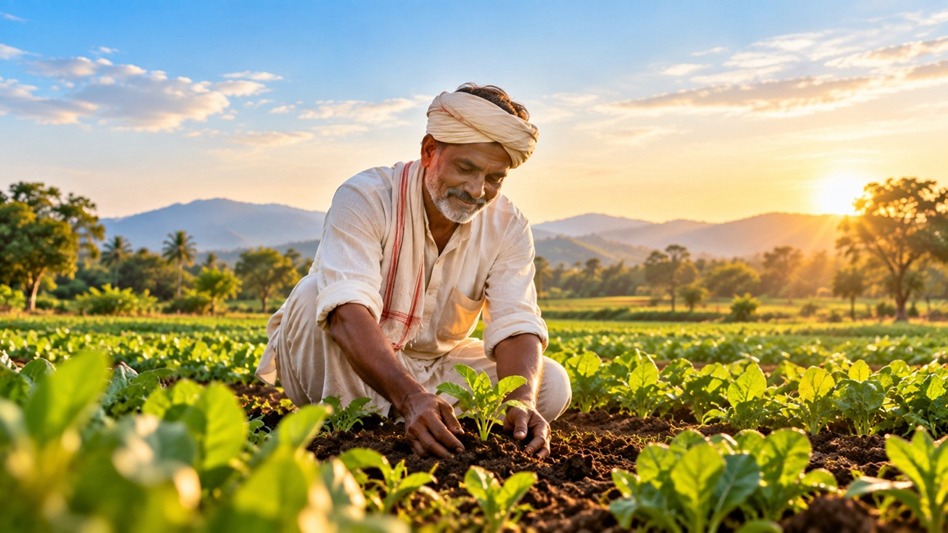
Agriculture is one of humanity’s oldest relationships with Nature. Every crop depends on soil, water, sunlight, air, microorganisms, climate and the natural processes that sustain life. Yet as agriculture has evolved, the focus has increasingly shifted towards controlling and optimizing these external factors. This raises a deeper question: Can agriculture work in harmony with Nature rather than simply trying to control it?
Maharishi Vedic Organic Agriculture offers a distinctive perspective on this question. Based on the vision of Maharishi Mahesh Yogi, it views agriculture not merely as the cultivation of land, but as a process of working in accordance with the intelligence of Nature. At its foundation is the understanding that consciousness is not separate from Nature but is connected with the deeper intelligence that governs the orderly functioning of life.
Maharishi expressed this principle through the statement: “Vedic Agri-culture is Agreeing with the Culturing Intelligence of Total Natural Law.” This perspective places the farmer at the centre of the agricultural process—not simply as someone who manages land and resources, but as a conscious participant in Nature.
What is Maharishi Vedic Organic Agriculture?
What is Maharishi Vedic Organic Agriculture? It is an approach that combines the principles of organic agriculture with the development of consciousness and Maharishi’s understanding of Natural Law.
Organic agriculture emphasizes natural methods of cultivation, healthy soil, ecological balance and reducing dependence on synthetic inputs. Maharishi Vedic Organic Agriculture builds upon these principles by introducing another dimension: the consciousness of the farmer.
The approach recognizes that a farm is a complex living system. Soil, seeds, water, sunlight, microorganisms, plants and weather interact continuously in ways that cannot be completely controlled by human intellect. There is an underlying order and intelligence within these processes.
Rather than attempting to control every aspect of Nature, the farmer can create conditions that support and cooperate with these natural processes. Agriculture thus becomes a relationship between the farmer, the land and the intelligence of Nature.
Consciousness at the Heart of Farming
A central feature of Maharishi’s vision is that the development of the farmer’s consciousness is important to the agricultural process.
The farmer makes countless decisions every day—how to prepare the soil, select seeds, manage crops and respond to changing environmental conditions. While agricultural knowledge and technology are valuable, Maharishi’s approach goes deeper by considering the quality of consciousness from which these decisions are made.
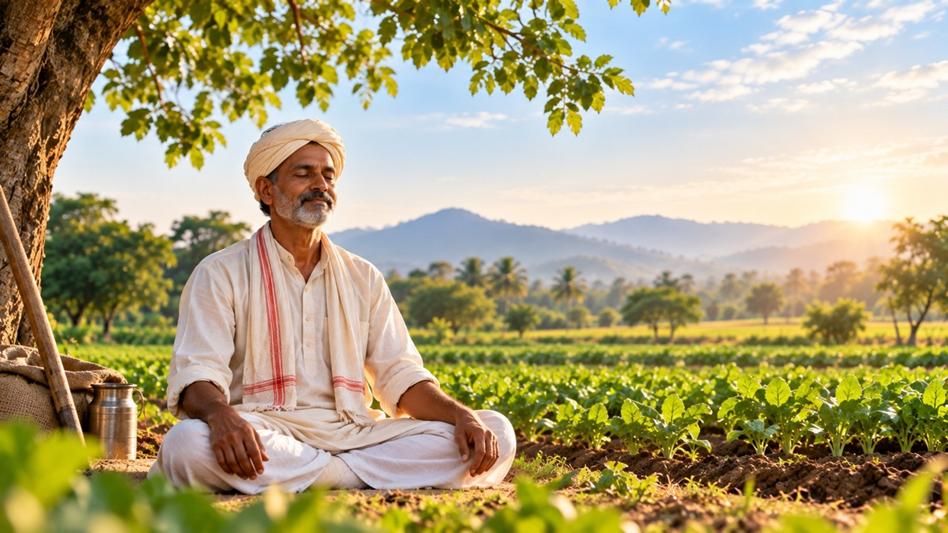
This is why Transcendental Meditation and the TM-Sidhi programme have an important place in Maharishi’s vision of agriculture. Through the development of consciousness, the individual cultivates a deeper level of inner awareness and silence. The intention is to support the farmer’s own development while helping establish a more harmonious relationship with the environment.
The transformation therefore begins not only with the field but with the individual working in the field.
When the farmer develops himself while caring for the land, the cultivation of consciousness and the cultivation of agriculture become interconnected processes.
From Organic Farming to Conscious Agriculture
Organic agriculture recognizes that the long-term health of farming depends upon maintaining the vitality of soil and the surrounding ecosystem. Maharishi Vedic Organic Agriculture extends this understanding by bringing human consciousness into the picture.
The farmer is viewed as a steward of Nature rather than simply a controller of it. Instead of seeing the land only as a production resource, the approach recognizes it as part of a larger living system.
This creates a more holistic understanding of agricultural well-being. The health of the soil, the vitality of the seed, the quality of the environment and the consciousness of the farmer are not viewed as completely separate concerns. They are interconnected elements of agriculture.
The Importance of Natural and Pure Seeds
Seed quality is another important aspect of this approach. A seed contains the potential for an entire plant, making the integrity of the seed fundamental to cultivation.
Maharishi Vedic Organic Agriculture places emphasis on natural, pure and non-GMO seeds, with the understanding that preserving the natural potential of the seed is important for healthy agricultural development.
The approach also incorporates Vedic Sounds and recitations with the intention of enlivening the intelligence of Nature and supporting the natural development of plants.
In this way, agriculture begins with attention to the basic elements of life: the farmer, the seed, the soil and the environment.
How Maharishi Vedic Agriculture Works
So, how Maharishi Vedic agriculture works can be understood through the integration of several principles.
First, the farmer develops consciousness through practices such as Transcendental Meditation and, where appropriate, the TM-Sidhi programme.
Second, natural and organic agricultural practices are used to support the health and vitality of soil and the wider environment.
Third, importance is given to the quality and integrity of seeds, including natural and non-GMO seeds.
Fourth, Vedic Sounds and recitations are incorporated as part of the agricultural approach.
Together, these principles seek to establish a relationship in which human activity works with, rather than against, the natural intelligence of the environment.
The emphasis is therefore not simply on changing farming techniques. It is also on developing the consciousness of the person who applies those techniques.
Benefits of Maharishi Vedic Organic Agriculture
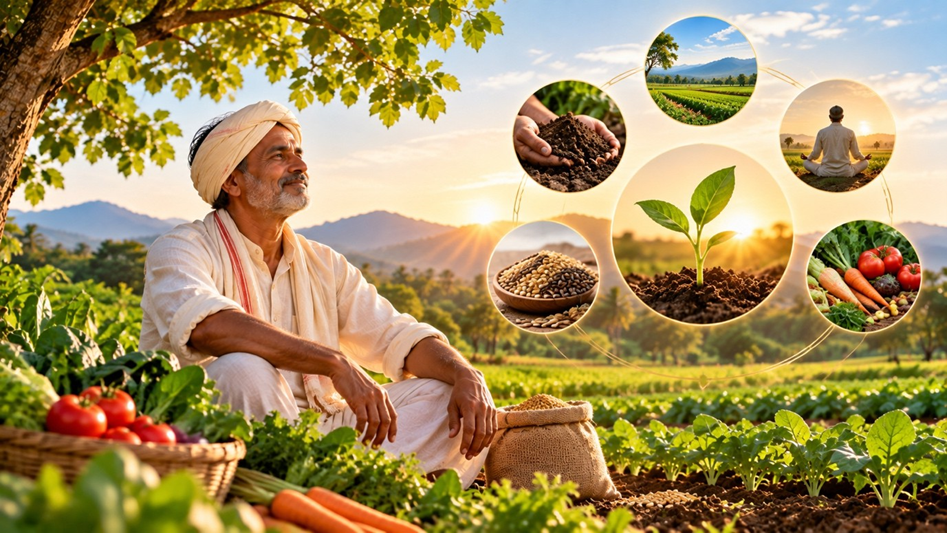
The benefits of Maharishi Vedic Organic Agriculture can be understood from both agricultural and human perspectives.
Harmony with Nature: The approach encourages farmers to work with natural processes rather than viewing Nature only as something to be controlled.
Development of consciousness: By incorporating Transcendental Meditation and the TM-Sidhi programme, the approach gives importance to the inner development of the farmer.
Attention to soil and ecological health: Its organic foundation emphasizes practices intended to maintain the vitality of soil and support a balanced agricultural environment.
Emphasis on seed integrity: The use of natural, pure and non-GMO seeds reflects the importance given to preserving the natural potential of crops.
A
holistic approach to food production: Agriculture is considered as a complete
system involving the farmer, soil, seed, environment, crop and ultimately
the food produced.
Human development through agriculture: Farming becomes more than an economic activity. It can also become an opportunity to develop a deeper relationship with Nature and with one’s own consciousness.
Can Agriculture Really Be in Harmony with Nature?
Agriculture will always involve human intervention. Farmers must prepare land, select seeds, cultivate crops and make decisions based on changing circumstances. The question is therefore not whether human beings can completely remove themselves from Nature, but whether their actions can be guided by greater harmony with natural processes.
Maharishi’s vision suggests that they can.
When the farmer respects the vitality of the soil, preserves the integrity of the seed and works with natural processes while simultaneously developing consciousness, agriculture can move from an approach of control towards one of cooperation.
This also provides a broader understanding of sustainability. Sustainable agriculture is not only about protecting resources for future generations. It can also involve developing a way of living in which human activity is increasingly aligned with the natural order of life.
Cultivating the Land, Cultivating Life
The deeper vision of Maharishi Vedic Organic Agriculture is that the cultivation of land and the cultivation of consciousness can go hand in hand.
The farmer nourishes the soil. The soil supports the seed. The seed develops into a plant. The plant provides food that nourishes human life. At the same time, the development of consciousness can support a more harmonious relationship between the farmer and the natural environment.
This creates a cycle in which agriculture is understood not simply as food production, but as a way of participating consciously in the larger processes of Nature.
Ultimately, Maharishi Vedic Organic Agriculture presents a consciousness-based approach to agriculture—one that seeks to bring together the farmer, the land, the seed and the intelligence of Nature.
When we cultivate the land while also cultivating consciousness, farming can become more than a method of producing food. It can become an opportunity to live in greater harmony with Nature and to support a more nourishing relationship between human life and the environment.
Frequently Asked Questions
What is Maharishi Vedic Organic Agriculture?
Maharishi Vedic Organic Agriculture is an approach that combines organic farming principles with the development of consciousness and Maharishi Mahesh Yogi’s understanding of Natural Law. It emphasizes harmony with Nature, natural and pure seeds, organic agricultural practices, Vedic Sounds and the development of the farmer’s consciousness.
How Maharishi Vedic agriculture works?
Maharishi Vedic agriculture works by integrating the development of the farmer’s consciousness with natural and organic agricultural practices. Transcendental Meditation and the TM-Sidhi programme have an important place in Maharishi’s vision, alongside attention to soil, seeds, the environment and Vedic Sounds and recitations.
What are the benefits of Maharishi Vedic Organic Agriculture?
The benefits of Maharishi Vedic Organic Agriculture include a greater emphasis on harmony with Nature, attention to soil and ecological vitality, preservation of seed integrity, a holistic approach to food production and the development of the farmer’s consciousness. It seeks to connect the well-being of the farmer, land, environment and society.


